

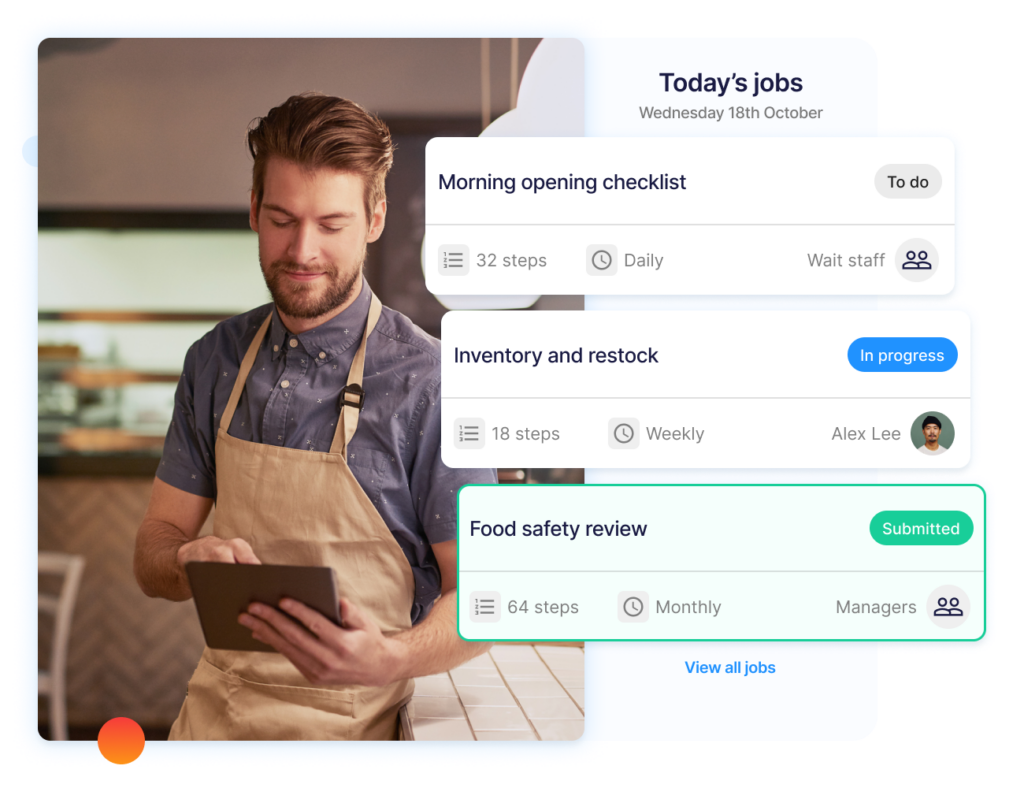
What is a Food Temperature Monitoring System and Why is it Important in the Foodservice Industry?
A food temperature monitoring system is a technology solution that continuously tracks and records temperatures across food storage equipment like refrigerators, freezers, and coolers. These systems use sensors and digital tools to ensure food stays within safe temperature ranges throughout the supply chain.
The Importance of Food Safety
Food safety is crucial for any successful foodservice operation. When temperatures go outside safe limits, bacteria multiply quickly, turning fresh ingredients into potential health risks. Just one instance of temperature failure can ruin an entire stock, endangering customers and putting businesses at risk.
The foodservice industry constantly strives to maintain quality while handling large-scale operations. Temperature monitoring systems offer the vigilance required to safeguard both product quality and consumer confidence.
Understanding the Risks of Improper Temperature Control
Unsafe food temperatures pose a hidden danger that can devastate businesses and harm consumers. The “danger zone” between 40°F and 140°F is where harmful bacteria such as Salmonella, E. coli, and Listeria thrive.
Here are some common risks associated with improper temperature control:
- Bacterial growth in improperly stored raw meats, dairy products, and prepared foods
- Spoilage leading to wasted products and financial losses
- Cross-contamination when temperature failures impact multiple types of food
- Regulatory violations resulting in fines, closures, or legal actions
- Foodborne illness outbreaks damaging reputation and customer loyalty
The Limitations of Manual Temperature Checks
Relying on manual temperature checks leaves gaps in monitoring coverage. Equipment breakdowns during non-operating hours, power fluctuations, and human mistakes all contribute to undetected temperature deviations.
A food temperature monitoring system addresses these shortcomings by offering continuous protection that manual methods cannot provide.
How Can Food Temperature Monitoring Systems Help Prevent Foodborne Illnesses?
Temperature monitoring systems directly address the main cause of foodborne illness outbreaks: bacteria growing in the “danger zone” between 40°F and 140°F. When food stays at unsafe temperatures for too long, harmful germs like Salmonella, E. coli, and Listeria multiply quickly, turning safe food into health risks within hours.
The problem is significant and needs attention. The Centers for Disease Control and Prevention (CDC) estimates that 48 million Americans get sick from foodborne illnesses each year. Out of these cases, 128,000 require hospitalization and 3,000 result in death. A large number of these incidents are caused by temperature abuse, with the FDA identifying improper holding temperatures as one of the top five risk factors contributing to foodborne illness in retail and foodservice establishments.
What Makes Temperature Control Critical for Foodborne Illnesses Prevention?
Harmful bacteria thrive when conditions are right. A single bacterium can multiply to over 2 million in just seven hours at room temperature. Keeping food cold below 40°F slows this growth significantly, while keeping it hot above 140°F stops multiplication completely. Without regular monitoring, equipment failures, power outages, or human mistakes can unknowingly allow food to enter dangerous temperature ranges.
Real-life consequences can be devastating. In 2019, an outbreak linked to improperly stored chicken salad at a catering facility made 240 people sick across three states. Investigations revealed that refrigeration units had failed overnight, but staff didn’t discover the problem until after service began. Continuous temperature monitoring with automated alerts could have prevented the entire incident.
How Does FDA FSMA Change the Food Safety Landscape?
The FDA’s Food Safety Modernization Act is the most significant change to food safety laws in over 70 years. Signed in 2011, FSMA shifts the focus from reacting to contamination to preventing it. The law gives the FDA new enforcement powers and requires food facilities to implement preventive controls based on hazard analysis.
FSMA’s preventive controls rule requires specific actions:
- Written food safety plans identifying potential hazards
- Implementation of preventive controls to minimize risks
- Monitoring procedures
How Do Food Temperature Monitoring Systems Ensure Food Safety?
Modern food temperature monitoring systems rely on continuous temperature tracking through strategically placed sensors that record conditions 24/7. These sensors attach to refrigeration units, walk-in coolers, and freezer storage areas, capturing temperature data at regular intervals—often every few minutes—to create a comprehensive record of storage conditions throughout each day.
1. Continuous Temperature Tracking
These systems use sensors that are placed strategically to monitor the temperature continuously. These sensors are attached to various storage areas such as refrigeration units, walk-in coolers, and freezers. They record the temperature data at regular intervals, usually every few minutes, to maintain a detailed record of the storage conditions throughout the day.
2. Wireless Monitoring Technology
With the use of wireless monitoring technology, there is no longer a need for manual data retrieval. Instead, the temperature readings are automatically transmitted to cloud-based platforms or centralized dashboards. This means that managers can conveniently access and view the conditions of multiple storage units from anywhere with an internet connection.
3. System Architecture
The system architecture typically includes:
- Temperature probes: These are installed inside refrigeration units at multiple points to ensure accurate temperature measurement.
- Gateway devices: These devices collect data from multiple sensors and transmit it for further processing.
- Cloud-based software: This software stores historical data and manages alert parameters.
- Mobile and desktop applications: These applications allow for remote monitoring and reporting.
4. Real-Time Alerts
Real-time alerts play a crucial role in preventing temperature excursions. When the sensors detect readings that fall outside the predefined safe ranges—such as a refrigerator exceeding 41°F or a freezer rising above 0°F—the system immediately sends notifications to designated staff through various channels such as text messages, emails, and push notifications on mobile devices.
5. Customizable Alert Systems
The alert systems can be customized based on severity and duration. For example, a brief temperature spike during defrost cycles may trigger a low-priority notification, while sustained dangerous temperatures will generate urgent alerts to multiple team members. Some advanced systems also have the capability to automatically escalate notifications if initial alerts go unacknowledged, ensuring that critical issues are never overlooked.
6. Tracking Temperature Trends
In addition to simple threshold alerts, these systems also track temperature trends to identify potential equipment degradation before complete failure occurs. For instance, if a refrigerator gradually struggles to maintain proper temperatures over time, it indicates the need for maintenance in order to prevent unexpected breakdowns that could jeopardize entire inventories of perishable goods.
7. Automatic Data Logging
Data logging is done automatically without any intervention from staff members. This creates tamper-proof records that document compliance with food safety protocols. These digital records replace manual temperature logs and have the advantage of capturing readings even during overnight hours or weekends when facilities have minimal staffing.
Interestingly, this concept of automatic data logging isn’t limited to food safety alone; similar principles are applied in other sectors as well. For example, hospitals are now leveraging automated temperature monitoring systems for their sensitive environments, ensuring consistent compliance with health regulations while reducing manual workload significantly
What Benefits Can Businesses Gain from Implementing a Food Temperature Monitoring System?
1. Automated Data Collection
Automated data collection eliminates the tedious process of manual temperature logging that consumes valuable staff time. Digital systems record temperature readings every few minutes around the clock, creating comprehensive records without requiring employees to walk between storage units with clipboards and thermometers multiple times per shift.
2. Prevention of Human Error
Manual record-keeping introduces significant risks through the prevention of human error. Staff members working during busy service periods may forget temperature checks, record incorrect readings, or accidentally transpose numbers when transferring handwritten notes to official logs. Automated systems capture precise measurements consistently, removing these vulnerabilities from your operation.
3. Streamlined Operations and Staff Efficiency
Temperature monitoring systems free kitchen staff to focus on food preparation and customer service rather than documentation tasks. A single manager can oversee temperature data across multiple storage units from one dashboard instead of physically checking each location. This centralized approach reduces interruptions to workflow and allows team members to address actual food safety issues rather than spending time on paperwork.
The time savings compound across daily operations. Consider a restaurant checking temperatures manually four times per shift across ten storage units—that’s 40 separate checks daily, potentially consuming 30-60 minutes of labor. Automated systems handle this monitoring continuously while staff dedicate their attention to revenue-generating activities.
4. Enhanced Compliance Reporting
Compliance reporting becomes straightforward when systems automatically generate detailed temperature logs. Federal, state, and local health departments require specific documentation during inspections, and digital systems produce these reports instantly. The data includes timestamps, temperature readings, and duration of any temperature excursions, providing the thorough documentation regulators expect.
Multi-location businesses particularly benefit from centralized compliance management. Corporate teams can access temperature data from all sites simultaneously, identifying patterns or issues before they escalate into violations. This visibility supports consistent standards across the organization and simplifies audit preparation with the help of automated compliance tools.
5. Reliable Documentation for Regulatory Requirements
Digital temperature logs create tamper-proof records that satisfy regulatory scrutiny better than handwritten sheets. Health inspectors recognize that automated systems provide objective data free from the inconsistencies or gaps that often appear in manual logs. This reliability demonstrates your commitment to food safety protocols and can influence inspection outcomes favorably.
Why You Need a Food Temperature Monitoring System becomes clear when considering the alternative: incomplete records, potential violations
How a Food Temperature Monitoring System Protects Public Health and Brand Reputation
Temperature monitoring systems create physical barriers against cross-contamination by maintaining distinct temperature zones for raw and cooked foods. When refrigeration units maintain proper temperatures consistently, bacteria from raw meats, poultry, and seafood cannot multiply to dangerous levels that might spread to ready-to-eat items stored nearby. Automated alerts notify staff immediately when a cooler’s temperature rises above safe thresholds, prompting quick action to separate potentially compromised products before pathogens can transfer between food items.
How Cross-Contamination Prevention Works in Practice
The system tracks temperature variations across different storage areas, ensuring raw proteins remain at 40°F or below while cooked foods maintain their required temperatures. This separation becomes critical during power outages or equipment malfunctions when temperatures might fluctuate rapidly. Real-time monitoring catches these deviations within minutes rather than hours, allowing staff to relocate foods before bacterial growth accelerates.
Restaurant kitchens using these systems can demonstrate to health inspectors that they maintain proper temperature segregation 24/7. The digital records show exactly when foods entered storage, how long they remained at safe temperatures, and whether any temperature excursions occurred that might compromise safety.
Establishing Clear Food Disposal Protocols
Automated temperature logs remove guesswork from disposal decisions by providing concrete data about how long foods remained in the danger zone (40°F to 140°F). When a freezer malfunctions overnight, managers can review timestamped temperature records to determine exactly which products require disposal versus which remained safely frozen. This precision prevents both unnecessary waste and dangerous attempts to salvage compromised foods.
The system flags products that have exceeded safe temperature limits for specific durations:
- Dairy products exposed to temperatures above 40°F for more than two hours
- Frozen items that thawed and cannot be safely refrozen
- Hot-held foods that dropped below 135°F without proper reheating
- Cold-held items that warmed beyond safe limits during service
Staff receive immediate notifications about these conditions, enabling prompt removal of unsafe items before they reach customers. Documentation of these disposal actions demonstrates responsible food safety practices during health inspections or liability investigations.
Protecting Customer Health Through Proactive Monitoring
Each prevented foodborne illness represents a victory in public health. The proactive monitoring enabled by these systems not only safeguards customer health but also reinforces the brand’s reputation for safety and quality. By adhering to CDC guidelines on food safety prevention measures, businesses can further enhance their operational protocols and ensure a safer dining experience for all customers.
How Can These Systems Save Time and Reduce Costs for Businesses?
1. Time Savings through Automation
Automated temperature monitoring eliminates hours of manual labor each week. Staff members no longer need to walk through storage areas with clipboards and thermometers multiple times per day, freeing them to focus on food preparation, customer service, and other revenue-generating activities.
Traditional manual logging requires employees to check and record temperatures at least twice daily, often more frequently during peak hours. A single restaurant might spend 10-15 hours weekly on temperature documentation alone. Multiply this across multiple locations, and the employee time savings become substantial. Digital systems capture this data automatically every few minutes, creating comprehensive records without human intervention.
2. Cost Prevention from Non-Compliance
The financial impact of non-compliance extends beyond operational disruptions. Health department violations can result in fines ranging from hundreds to thousands of dollars per incident. A single failed inspection might trigger:
- Mandatory closure until violations are corrected
- Legal fees if customers file lawsuits after illness
- Increased insurance premiums following claims
- Lost revenue during shutdown periods
Foodborne illness outbreaks carry devastating financial consequences. The CDC estimates that a single outbreak can cost a restaurant $75,000 in lost revenue, legal fees, and increased insurance costs. Larger chains face even steeper penalties—multi-million dollar settlements and permanent damage to market position.
3. Inventory Protection through Automated Monitoring
Cost prevention through automated monitoring protects inventory investments. A malfunctioning freezer that goes unnoticed overnight can destroy thousands of dollars in protein, produce, and prepared foods. Real-time alerts catch equipment failures within minutes, allowing staff to transfer products before spoilage occurs. One prevented loss event often pays for the entire monitoring system.
4. Waste Reduction via Optimal Conditions
Food waste represents a significant expense in foodservice operations. The USDA reports that restaurants waste 4-10% of food purchased before it even reaches customers. Temperature fluctuations accelerate spoilage, forcing businesses to discard products that might have remained safe with proper monitoring. Automated systems maintain optimal conditions, extending shelf life and reducing unnecessary waste.
5. Operational Efficiency with Remote Access
Operational efficiency improves when managers access temperature data remotely. Multi-location operators can review compliance across all sites from a single dashboard, identifying problem areas without physical inspections. This centralized visibility enables faster decision-making and more effective resource allocation.
6. Risk Reduction Recognized by Insurance Providers
Insurance providers increasingly recognize the risk reduction these systems provide. Some carriers offer

Why Every Foodservice Operation Needs a Reliable Temperature Monitoring System
Food temperature monitoring systems are crucial for ensuring food safety in restaurants, cafeterias, grocery stores, and food distribution centers. These tools go beyond just meeting regulations—they provide automated monitoring that overcomes the limitations of manual processes.
The Importance of Food Temperature Monitoring Systems
Every day, foodservice operations face challenges in maintaining proper storage conditions. With so much at stake—customer health, product quality, compliance records—it’s essential to have a system in place that can consistently oversee these factors.
Here are some key reasons why food temperature monitoring systems are important:
- Reduce foodborne illness risks: By constantly monitoring temperatures, these systems help prevent the growth of harmful bacteria and other pathogens that can cause foodborne illnesses.
- Protect customer health: When food is stored and handled correctly, it minimizes the risk of serving unsafe meals to customers.
- Maintain product quality: Proper temperature control ensures that perishable items like meats, dairy products, and produce retain their freshness and taste.
- Verifiable compliance records: In case of audits or inspections, having documented proof of your temperature monitoring practices demonstrates your commitment to food safety.
The Consequences of Not Having a Monitoring System
It’s important to understand why you need a food temperature monitoring system by considering what could happen if you don’t have one.
- Reliance on manual checks: Manual temperature checks depend on human memory and consistent execution. This leaves room for error and oversight—something that can be detrimental in a busy kitchen environment.
- Potential financial losses: A single missed check during peak hours can lead to thousands of dollars worth of spoiled inventory. This not only affects your bottom line but also puts your reputation at risk if customers fall ill from consuming unsafe food.
- Regulatory challenges: Without proper documentation proving that you’re following safety protocols, you may face difficulties during health inspections or audits.
Meeting Regulatory Requirements with Technology
Modern foodservice operations are under increasing scrutiny from regulators and consumers alike. Health inspectors require thorough documentation of your safety practices while insurance providers want proof that you’re taking necessary precautions.
A reliable temperature monitoring system addresses all these needs simultaneously. It provides:
- 24/7 vigilance: Unlike human staff who may forget or overlook checks, this technology never takes breaks or misses critical deviations.
- Immediate alerts for equipment failures: When refrigeration units malfunction outside regular business hours, the system sends alerts to designated personnel immediately—potentially saving entire inventories from spoilage.
- Standardized monitoring across multiple locations: For businesses with multiple sites, having an automated system ensures consistency in how temperatures are monitored and recorded.
Protecting Public Health Through Automation
Every foodservice operation deals with products that require precise temperature control—whether it’s storing raw ingredients or serving cooked dishes. The question isn’t whether you can afford to implement a monitoring system; it’s whether you can afford the consequences of operating without one.
The risks associated with inadequate temperature management are significant:
- Potential lawsuits from customers who suffer illnesses
- Fines imposed by regulatory authorities for non-compliance
- Losses incurred due to spoiled inventory or damaged reputation
By investing in automated safety protocols through temperature monitoring systems, you create an environment where public health is prioritized while also protecting your business interests. Additionally, adopting such systems aligns with the principles set forth in the
More about Protecting Perishables: Essential Food Safety Temperature Monitoring