

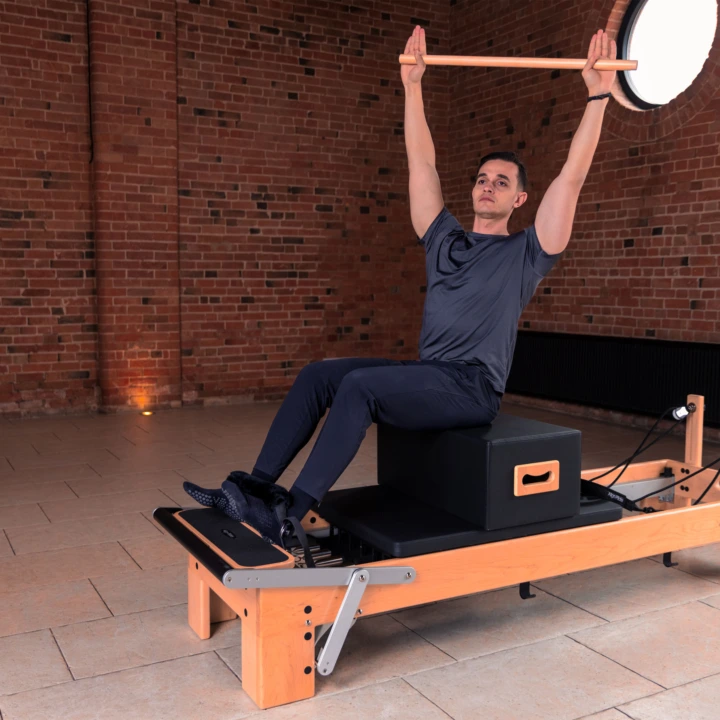
In Australian studios and home setups, the box is one of the most practical props for improving spinal articulation, rotation, side bending, and extension. Used well, it also reduces common compensations through the hips, shoulders, and neck.
What is a Pilates reformer sitting box, and why does it matter for spinal mobility?
A Pilates reformer sitting box is a padded, firm box that sits on the reformer carriage to change height, angles, and body positions. It matters because it improves leverage and alignment, which makes spinal mobility work cleaner and more repeatable.
By raising the body off the carriage, they can access better pelvic positioning and a clearer sense of spinal stacking. That often means less gripping in the hip flexors and less strain in the neck during mobility drills.
How does the sitting box help clients find a more neutral pelvis?
It helps by elevating the sit bones and giving clearer contact points, so clients can feel whether they are tucked, arched, or truly neutral. On a Pilates reformer sitting box, they can also adjust foot placement to reduce hamstring tension that pulls the pelvis out of position.
When the pelvis is set well, the spine can move segment by segment rather than as one rigid unit. That is the foundation for safer flexion, extension, and rotation.
Why does added height improve spinal articulation in flexion?
Added height often reduces restrictions from tight hips and calves, which can block spinal rounding. With a Pilates reformer sitting box, they can sit tall first, then roll back with less bracing and fewer shortcuts.
That improved access makes exercises like seated roll-backs and C-curve work more effective. It also supports smoother movement through the thoracic spine, which many Australians lose with desk-based routines.
How can the sitting box support thoracic rotation work?
Thoracic rotation improves when the pelvis stays steady and the ribs can move without the shoulders taking over. A Pilates reformer sitting box creates a stable seat so they can rotate from the mid-back while keeping weight even on both sit bones.
This setup is useful for side-sitting twists and seated rotation patterns with straps. It also helps instructors cue rib movement rather than arm pulling, which is a common compensation in studios.
How does the box assist with lateral flexion and side-bending patterns?
Side bending is often limited by fear of falling, shoulder tightness, or poor pelvic control. On a Pilates reformer sitting box, they can anchor one side of the pelvis and explore length through the opposite waist with more confidence.
The firm surface gives immediate feedback if they collapse or hike a hip. That helps them build symmetrical side-body mobility that transfers to everyday tasks like reaching, lifting, and carrying.
What role does the sitting box play in spinal extension and opening the chest?
It gives a supported base for extension so they can focus on thoracic opening rather than lower back hinging. Using a Pilates reformer sitting box, they can set the pelvis, lift through the sternum, and extend through the upper back with less compression.
This is especially relevant for clients in Australia who drive long distances or sit at computers, where the thoracic spine tends to stiffen. Better extension can also improve breathing mechanics and shoulder positioning.
How can a sitting box reduce neck and shoulder tension during mobility work?
It can reduce tension by improving height and arm mechanics, so the upper traps do not have to stabilise everything. On a Pilates reformer sitting box, they can sit or kneel in positions that allow the shoulders to stay down and wide as the spine moves.
When the torso is better organised, they are less likely to grip the neck during rotation or flexion. That is often the difference between “stretching” and true mobility work.
Why is the box useful for clients with stiff hips or limited hamstring length?
Stiff hips and tight hamstrings commonly force the pelvis to tuck, which blocks spinal movement and encourages strain elsewhere. A Pilates reformer sitting box changes the hip angle so they can sit upright without fighting their own anatomy.
This can make seated spinal work accessible for beginners, older clients, and anyone returning after time off. It also helps them build mobility without forcing range that the hips are not ready to give.
How does the sitting box help manage load and control with reformer springs?
Springs can either assist movement or add resistance, and the box helps clients stay organised as that load changes. With a Pilates reformer sitting box, they can maintain alignment while the carriage moves, which is critical for controlled spinal articulation.
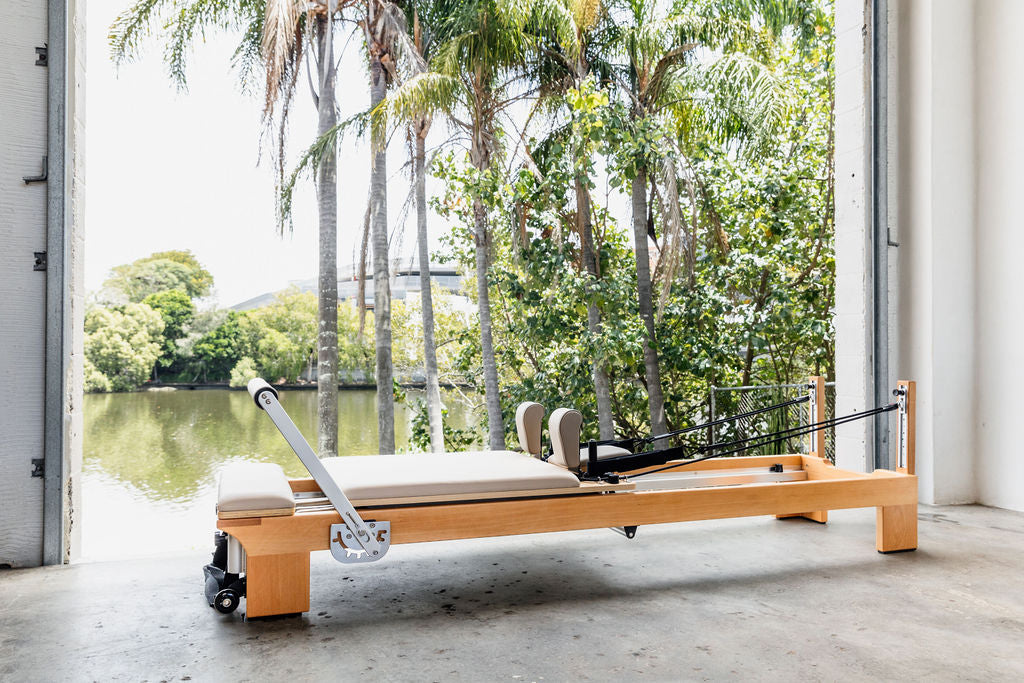
It also allows instructors to progress mobility work gradually, from assisted roll-backs to stronger, more resisted patterns, while helping clients explore Pilates equipment for home that supports their practice. That kind of progression tends to suit mixed-ability Australian classes.
Which spinal mobility exercises commonly use a sitting box?
They commonly use it for seated roll-backs, rowing series, side-sitting twists, mermaid-style side bends, and supported thoracic extension. A Pilates reformer sitting box also works well for short-box style sequences that focus on articulation and rotation.
The exact choices depend on the reformer brand and studio programming. What stays consistent is the goal: better control of the pelvis while the spine moves freely.
How should they cue alignment to get the most out of spinal mobility work on the box?
They should cue even weight through both sit bones, length through the crown of the head, and ribs stacked over the pelvis. On a Pilates reformer sitting box, small cues often outperform big corrections because the surface already provides feedback.
They can also cue breath to guide movement, such as exhaling into flexion or rotating on an exhale to reduce rib stiffness. Consistent cueing helps them avoid collapsing into the lower back.
What safety checks help prevent lower back compression on the box?
They should check that the pelvis is not tipping forward into an exaggerated arch during extension work. On a Pilates reformer sitting box, they can also ensure the ribs do not flare and the movement comes from the thoracic spine rather than lumbar hinging.
For flexion, they should avoid yanking on straps or dropping the head heavily. A controlled range that stays smooth is more valuable than chasing depth.
How do instructors choose the right box size and setup in Australian studios?
They choose based on the reformer model, the client’s proportions, and the exercise goal. In many Australian studios, the standard sitting box is sized to sit securely on the carriage and feel firm enough to support load without wobble.
They also check that it is centred, stable, and not interfering with shoulder rests or straps. A stable setup lets mobility work feel safe, which encourages better movement quality.
When might they avoid the sitting box or modify spinal mobility work?
They might avoid it if a client cannot sit comfortably due to acute pain, recent surgery, or nerve symptoms that worsen in seated positions. Even then, a Pilates reformer sitting box can sometimes be used differently, such as to support the torso in a more neutral position.
They can also swap seated work for side-lying or supported kneeling options. In all cases, comfort and symptom response should guide exercise selection.
How does a sitting box support at-home spinal mobility practice in Australia?
It supports home practice by making spinal mobility work easier to set up and repeat with consistent alignment. A Pilates reformer sitting box gives a familiar platform that helps them maintain technique without needing constant hands-on correction.
For Australians training at home, consistency is often the biggest challenge, not motivation. A stable, repeatable setup can make short sessions more effective and safer over time.
What results can they expect if they use the box consistently for mobility?
They can expect smoother spinal articulation, better thoracic rotation, and more comfortable extension over weeks and months. With a Pilates reformer sitting box, they often notice reduced stiffness after sitting and improved posture during daily tasks.
They may also feel more even left-to-right movement as side bending and rotation become less compensatory. The best results usually come from controlled, moderate range repeated regularly rather than occasional long sessions.
How can they tell if the sitting box is actually improving spinal mobility?
They can tell by noticing cleaner movement without momentum, less neck gripping, and easier rib movement during rotation and extension. A Pilates reformer sitting box should make their mobility work feel more organised, not harder to control.
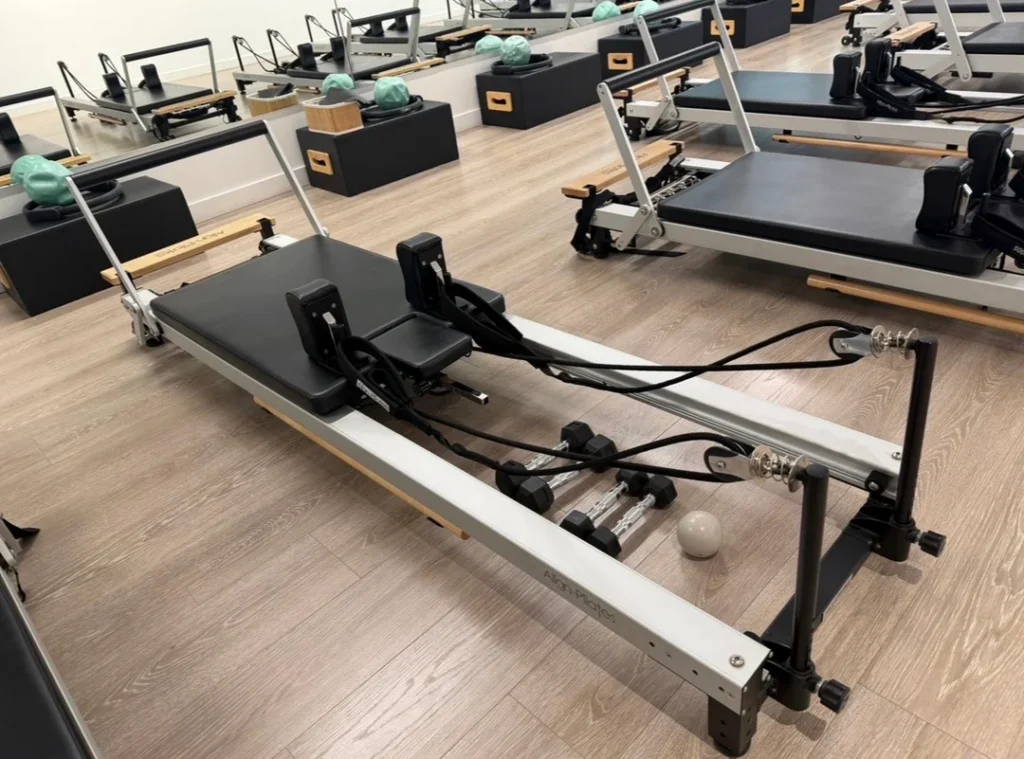
Outside the studio, they may find turning to look over a shoulder feels easier, or sitting upright for longer feels less tiring. Those everyday changes are often the most meaningful markers of progress.
FAQs (Frequently Asked Questions)
What is a Pilates reformer sitting box and how does it enhance spinal mobility?
A Pilates reformer sitting box is a padded, firm box placed on the reformer carriage to adjust height and body positioning. It enhances spinal mobility by providing better leverage and alignment, allowing clients to move through the spine with more control, comfort, and consistency. This setup improves pelvic positioning and spinal stacking, reducing strain in the hips and neck during mobility exercises.
How does using a Pilates reformer sitting box help achieve a neutral pelvis?
The sitting box elevates the sit bones and offers clearer contact points, enabling clients to sense whether their pelvis is tucked, arched, or neutral. It also allows for foot placement adjustments that reduce hamstring tension pulling the pelvis out of position. Achieving a neutral pelvis facilitates segmental spinal movement essential for safe flexion, extension, and rotation.
In what ways does added height from the sitting box improve spinal articulation during flexion exercises?
Added height reduces restrictions caused by tight hips and calves that often block spinal rounding. Sitting tall on the Pilates reformer sitting box before rolling back minimizes bracing and compensations, making exercises like seated roll-backs and C-curve work more effective while promoting smoother thoracic spine movement.
How can the Pilates reformer sitting box support thoracic rotation exercises?
The sitting box provides a stable seat that helps maintain pelvic steadiness and even weight distribution on both sit bones. This stability allows clients to rotate from the mid-back without shoulder compensation. It is especially useful for side-sitting twists and seated rotation patterns with straps, enabling instructors to cue rib movement rather than arm pulling.
What benefits does the sitting box offer for lateral flexion and side-bending patterns?
By anchoring one side of the pelvis on its firm surface, the sitting box enables clients to explore length through the opposite waist with confidence. It provides immediate feedback if they collapse or hike a hip, helping build symmetrical side-body mobility that translates into everyday activities like reaching, lifting, and carrying.
How does incorporating a Pilates reformer sitting box reduce neck and shoulder tension during spinal mobility work?
The sitting box improves body height and arm mechanics so that upper trapezius muscles do not have to over-stabilize. Sitting or kneeling on the box allows shoulders to stay down and wide as the spine moves, organizing the torso better and decreasing gripping in the neck during rotation or flexion. This distinction enhances true mobility rather than just stretching.
<script type="application/ld+json">
{
  "@context": "https://schema.org",
  "@type": "BlogPosting",
  "mainEntityOfPage": {
    "@type": "WebPage",
    "@id": "https://noni4all.com/how-a-pilates-reformer-sitting-box-supports-spinal-mobility-work/"
  },
  "headline": "How a Pilates Reformer Sitting Box Supports Spinal Mobility Work",
  "image": [
    "https://noni4all.com/wp-content/uploads/2026/09/C7A094BB-F028-40C7-AF63-32E720F0DB99.webp",
    "https://noni4all.com/wp-content/uploads/2026/09/PAPPOLE32-align-pilates-reformer-maple-pole-2-720x720.jpg.webp",
    "https://noni4all.com/wp-content/uploads/2026/09/PilatesWorld-169-1.jpg"
  ],
  "author": {
    "@type": "",
    "name": "Katie Mackinlay",
    "url": "https://noni4all.com/author/admin/"
  },
  "publisher": {
    "@type": "Organization",
    "name": "Noni For All",
    "logo": {
      "@type": "ImageObject",
      "url": "https://noni4all.com/wp-content/uploads/2025/06/logo.png"
    }
  },
  "datePublished": ""
}
</script>